
Courier software, or logistics software? An honest answer
If your business is standalone parcel delivery, dedicated courier-dispatch tools are built for you. If your pickups feed a warehouse and your deliveries finish an import, you need the freight platform. Here is the line between the two.
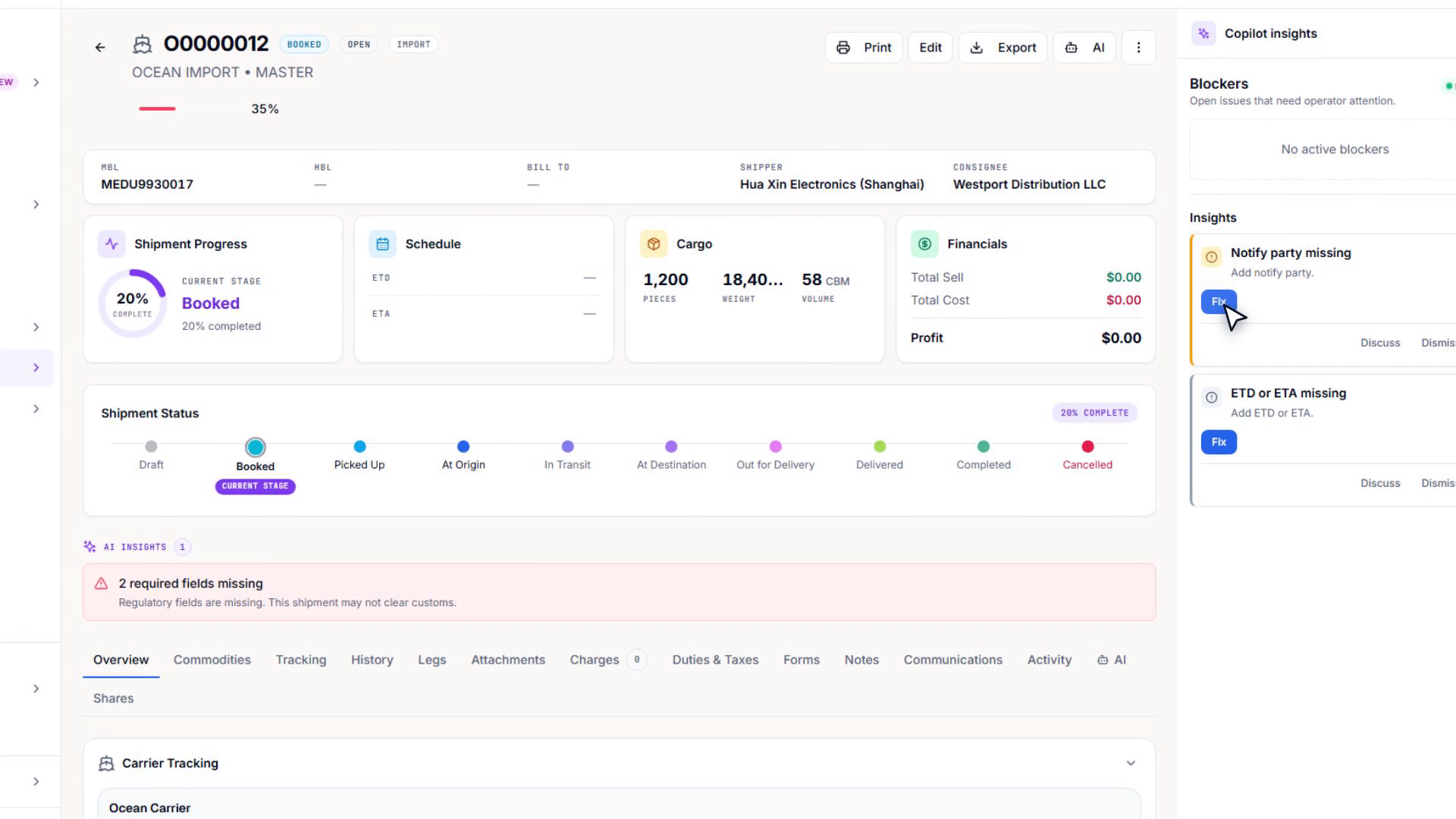
The short answer: Courier software runs standalone parcel operations: dispatch boards, driver apps, route optimization. Linbis is logistics software — and its pickup and delivery capabilities exist to serve freight: pickup orders that feed warehouse receipts and consolidations, final-mile delivery of imports with signature-and-photo proof, and customers notified automatically. If routing vans efficiently is your core business, buy a dispatch tool; if the parcel is part of a freight file, the file should own it.
The decision, in one table
| Your operation | What to buy | Why |
|---|---|---|
| Standalone parcel delivery, many drivers, dense routes | Dedicated courier-dispatch software | Route optimization and driver apps are that category’s whole reason to exist |
| Pickups that feed a warehouse or consolidation | Logistics software (Linbis) | The pickup is the first mile of a freight file — it belongs on the file |
| Final-mile delivery of imports you cleared | Logistics software (Linbis) | The delivery closes the file: POD, charges, and the customer’s visibility live there |
| Both a courier fleet AND freight files | Both, honestly | Dispatch tool for the fleet; the freight platform as the system of record |
That table is deliberately honest: Linbis does not sell route optimization, and pages that pretend otherwise cost their vendors trust in the first demo.
What Linbis does do for pickup and delivery
- Pickup orders on the file — created from the shipment or warehouse receipt they serve, with the paperwork generated — not a disconnected task list.
- Delivery orders that close imports — the last mile of an ocean or air file, documented from the same record the customer has been tracking.
- Proof of delivery that holds up — captured signature and photos on the release, attached to the record permanently.
- The customer already knows — status-flow emails send the right paperwork at the right moment, and the portal shows progress without a phone call.
The freight-courier bridge nobody else builds
Courier tools stop at the doorstep; freight tools often start at the port. The operator caught between them — local pickups feeding consolidations, imports needing final-mile — usually runs two systems and a lot of glue. In Linbis the bridge is native: a pickup order becomes a warehouse receipt, the receipt joins a consolidation, and the delivery order closes the same file the customer has watched all along.
Frequently asked questions
Is Linbis courier software?
No — and this page says so on purpose. Linbis is logistics software whose pickup and delivery capabilities serve freight files. Standalone parcel operations with dense routes are better served by dedicated courier-dispatch tools.
Does Linbis do route optimization?
No. Pickup and delivery orders, proof of delivery with signature and photos, warehouse hand-off, and customer notification — yes. Optimizing multi-stop van routes is a different product category.
Can Linbis capture proof of delivery?
Yes — releases capture a signature and photos, attached permanently to the record, with the customer notified automatically by the status flow.
When do couriers use Linbis?
When the parcel work is part of freight: pickups that feed warehouse receipts and consolidations, and final-mile delivery of cleared imports — the cases where the file, not the route, is the system of record.
Buy the right tool — even if it isn’t ours
And when your pickups and deliveries belong to freight files, the file should run them.
Start Free TrialThe screens and clips on this page are the real Linbis product recorded on a demonstration company; workflows shown are production features.